Energy & Environment
Northern California’s incredible landscapes and natural resources are the economic and cultural cornerstone of our district’s communities. I am committed to protecting these natural resources in a fair and equitable manner for future generations, and I will keep working with my colleagues on both sides of the aisle to help protect our air, water, public lands, and wildlife. <br />
<br />
<b>Bay Delta Conservation Plan (BDCP)</b><br />
The Sacramento-San Joaquin Delta is one of our region’s most precious and economically important resources. The Delta, spanning Contra Costa, Sacramento, San Joaquin, Solano, and Yolo counties in Northern California at the confluence of these two rivers, and the nearby San Francisco Bay together (the Bay-Delta) form a natural treasure that is vital to our region, California, and the country. The Bay-Delta supports thousands of farming and fishing jobs, and provides critical habitat to a multitude of fish and wildlife. Many of our Delta communities have businesses that depend on a healthy Delta.<br />
<br />
The state of California and the federal government have teamed up with water users from south of the Delta to implement a Bay Delta Conservation Plan (BDCP). The BDCP claims to have co-equal goals of improving reliable water delivery and restoring the critical Bay-Delta ecosystem. However, as it is currently written, the BDCP is heavily focused on providing reliable water supplies to communities and farmers in Central and Southern California with little information on how this will impact Northern California. I am deeply concerned that the needs of our Delta communities will be disregarded in order to get as much water as possible to south-of-Delta water users. Putting the interests of south-of-Delta water contractors ahead of the Delta’s and North-of-Delta’s farmers, fishers, small business owners, and families is unacceptable. <br />
<br />
While reliable water delivery is important, we also must be innovative and consider water recycling, reuse and efficiency and reduce the pressures on the Bay-Delta ecosystem. I have met with Department of Interior Secretary Jewell as well as representatives of the Brown Administration to make sure our district views are known and incorporated into inclusive, transparent, science-based solutions to solve our water problems. <br />
<br />
Livelihoods are at stake. Until we have a plan that is transparent, based on sound science and developed with all stakeholders at the table, then any process that moves us closer to building these tunnels will recklessly risk billions of California tax dollars and thousands of jobs. As we move forward, I will work to make sure fair, science-based solutions are the ones that drive this issue.<br />
<br />
<b>E-Waste</b><br />
Each year, millions of tons of electronics equipment are discarded in the U.S. These products frequently end up in landfills, where they can release toxic chemicals such as lead, mercury, cadmium, and flame retardants into the environment. In recent years, more e-waste has been collected for recycling or reuse, but the majority of it is exported to developing nations such as China, Ghana, India, Nigeria, Pakistan and Thailand for salvage and metals recovery under conditions which are hazardous to human health and the environment. <br />
<br />
By exporting these used products, we are also exporting recycling and repair jobs that could be held by U.S. workers. Many responsible recyclers in the U.S. operate under capacity, undercut by brokers exporting e-waste to developing nations. These exports also fuel a growing counterfeit chip market in China that sells fake military grade chips into our military supply chain.<br />
<br />
In response to the growing e-waste crisis, I formed the bipartisan E-Waste Working Group to help develop solutions to the problem of obsolete electronics disposal. In 2009, I hosted the first-ever Congressional e-waste recycling event to highlight the impact of e-waste on the environment. This Congress, I introduced the bipartisan Responsible Electronics Recycling Act (RERA) (H.R. 2791). RERA would prohibit the export of certain electronic waste from the U.S. to developing nations. Tested and working equipment can still be exported to promote reuse. This approach is consistent with the policy most other developed nations have adopted via international treaties such as the Basel Convention. With this bill we can grow our domestic recycling industry while successfully managing the e-waste created within our own country.<br />
<br />
<b>Land Conservation</b><br />
California possesses some of the most beautiful forests, wetlands, and agricultural and open lands in our country. Unfortunately, many of these natural landscapes are at risk of being paved over by some who are only interested in the land’s commercial value. According to a 2010 report by the American Farmland Trust, more than a half million acres of California lands were urbanized between 1990 and 2004. If these aggressive development patterns continue, our state will lose another 2 million acres by 2050. <br />
<br />
I strongly believe that land conservation is an investment in our future. That is why I have fought for legislation to help preserve our agricultural lands and open spaces for future generations:<br />
• <b>Berryessa Snow Mountain National Conservation Area Act of 2013</b> – H.R. 1025 would unite all currently owned federal lands within the proposed National Conservation Area (NCA) boundary under one management plan. This would allow the region to be managed according to site specific needs and ensure continued recreational opportunities while safeguarding the region’s natural beauty, wildlife, rare plants, and waters – which include important sources of drinking water and irrigation for nearby communities.<br />
<br />
• <b>Conservation Easement Incentive Act</b> – This would provide family farmers, ranchers, and other landowners with a permanent incentive to donate development rights to their land. By providing tax benefits to landowners who choose conservation, the bill would help preserve our nation’s cherished farm lands and open spaces for future generations. This is pro-family farms. Last Congress, H.R. 1964 had 310 cosponsors but was not considered by the full House of Representatives. I recently reintroduced this important legislation in the 113th Congress, H.R. 2807. <br />
<br />
• <b>Endangered Species Recovery Act</b> – The Endangered Species Recovery Act, which was signed into law in 2008, allows land owners to take a tax deduction for implementing recovery plans for federally threatened and endangered species on their property. This law codified the first-ever tax incentive for landowners who helped protect or recover species federally listed under the Endangered Species Act.<br />
<br />
• <b>Northern California Coastal Wild Heritage Act</b> – H.R. 233, which was signed into law in 2006, permanently protects as wilderness 273,000 acres of publicly-owned land in Del Norte, Humboldt, Mendocino, Lake, and Napa Counties. This law permanently protects some of Northern California’s most treasured lands and watersheds. The Northern California Coastal Wild Heritage Act also designates 21 miles of Scenic River and approximately 51,000 acres as a Recreation Management Area for off-highway vehicles and mountain bikes.<br />
<br />
<b>Oceans and Waterways</b><br />
Northern California’s bays and waterways are some of the most scenic and productive in the world. However, we must fight to keep our waters clean and our wildlife healthy. We can only preserve these treasures if we continue to defend them against mismanagement and pollution.<br />
• <b>Salmon</b> – As co-founder and current vice-chair of the Congressional Wild Salmon Caucus, I understand the economic and cultural importance of the salmon for California communities. We must continue to restore salmon habitat and responsibly manage our limited water resources. The catastrophic salmon population collapse in 2007 should serve as a reminder that mismanagement of natural resources can cost billions of dollars in lost economic activity and tens of thousands of jobs. In the 113th Congress I have continued to fight for these and other efforts to promote healthy watersheds and protect California’s fishing industry.<br />
<br />
• <b>Aquatic Invasive Species</b> – Aquatic invasive species pose a costly challenge to communities across the United States by ruining lakes and waterways, devastating native habitat, and carrying dangerous diseases. Unfortunately, all too often this important problem only receives the attention it deserves after an invasive species has become established in a new area and has begun clogging water pipes, over-utilizing nutrients, or outcompeting native species.<br />
<br />
For this reason I am leading the fight against these invaders. As the founding co-chair of the Congressional Invasive Species Caucus, I am co-sponsor of the bipartisan Protecting Lakes Against Quaggas (PLAQ) Act to prevent invasive quagga mussels from spreading any further than they already have. Invasive freshwater mussels alone – like zebra and quagga mussels – have already cost our country over $5 billion. Aggressive, proactive legislation on this issue can help keep this problem contained and prevent the burden on taxpayers from spiraling out of control.<br />
<br />
• <b>Shellfish</b> – As founder and co-chair of the Congressional Shellfish Caucus, I am an active supporter of California shellfish aquaculture. Shellfish farms are environmentally friendly, cleaning our coastal waters and helping reestablish native ecosystems along our coastline. However, the shellfish industry faces difficult challenges such as a complex permitting process and environmental contamination like ocean acidification. I will continue to advocate strongly on behalf of this ecologically friendly industry which creates thousands of jobs in California.
WASHINGTON, D.C. – Today, Representatives Mike Thompson (CA-04) and Robert Wittman (VA-01) introduced a resolution designating the week of October 11-18, 2025, as National Wildlife Refuge Week.
Washington, D.C. – Today, Rep. Mike Thompson (D-CA) and Reps. Greg Steube (R-FL), Jimmy Panetta (D-CA), and Doug LaMalfa (R-CA) announced the introduction of the Federal Disaster Tax Relief Act of 2025. This bill extends Thompson and Steube’s landmark 2024 law providing tax relief for individuals impacted by federally declared disasters. The bill will permit victims to claim disaster-related personal casualty losses without having to itemize deductions through 2026. |
Washington, D.C. – Today, Rep. Mike Thompson (D-CA) and Rep. Doug LaMalfa (R-CA) introduced H.R. 5225, the Protect Innocent Victims of Taxation After Fire Extension Act. Joining them on this legislation are Reps. Sherman (D-CA), Bynum (D-OR), McClintock (R-CA), and Bentz (R-OR).

Washington, D.C. – Today, Rep. Mike Thompson (CA-04), alongside students from Napa Schools For Climate Action, announced House Concurrent Resolution 46 which formally recognizes Congress’ duty to ensure a healthy climate for future generations.
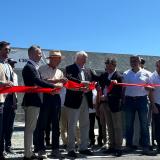
Calistoga, CA – Today, Rep. Mike Thompson (CA-04) joined the City of Calistoga, Energy Vault, and Pacific Gas & Electric Company (PG&E) to mark the opening of the new Calistoga Resiliency Center. Thompson’s green energy tax credits funded $28 million for the project.

Point Richmond, CA – On Tuesday, Rep. Mike Thompson (CA-04) was honored as CalWild’s 2025 California Conservation Champion for his steadfast advocacy and legislative accomplishments in safeguarding more California wilderness than any other living California Member of Congress.
Washington – Representative Mike Thompson (D-CA-04) today joined Senator Peter Welch (D-VT)and Senator Alex Padilla (D-CA) to introduce the Bicycle Commuter Act of 2025, bicameral legislation that would reinstate and expand the Bicycle Benefit Subsidy Program’s non-taxable bicycle commuter benefit to encourage more Americans to bike to work.
Washington, D.C. – On May 20, 2025, Representatives Mike Thompson (CA-04), Doris Matsui (CA-07), John Garamendi (CA-08), Mark DeSaulnier (CA-10), and Josh Harder (CA-09) issued a formal letter to Governor Newsom and California state legislature leadership reaffirming their strong opposition to the Delta Conveyance Project, also known as the Delta Tunnel. This letter comes in response to recent efforts by the Governor to fast-track approval and construction of the controversial project.
Washington – Today, Rep. Mike Thompson (D-CA-04) and Rep. Greg Steube (R-FL-17) announced that they have founded the bipartisan Natural Disaster Caucus. Members of the Natural Disaster Caucus are dedicated to natural disaster preparation, response, and relief. Reps. Thompson and Steube will serve as co-chairs of the caucus, which will provide resources for Members of Congress and their staff to help districts across our country prevent, prepare for, and respond to natural disasters.
Napa – Last week, Reps. Mike Thompson (CA-04) and Seth Moulton (MA-06) led a letter with 26 other representatives opposing FEMA’s decision to terminate funding under the Building Resilient Infrastructure and Communities (BRIC) program and urging the agency to restore the grant program. This popular program provides funding for projects that reduce disaster risks, improve community preparedness, and enhance infrastructure to withstand future hazards like floods, wildfires, hurricanes, and earthquakes.